
TLDR
A P2P remittance system where merchants cash out recipients in exchange for BCH—effectively buying BCH with built-in customer acquisition. Payment-first covenants protect recipients from volatility. Passive sellers automate liquidity via phone notification parsing. Merchants mint stability tokens to hold value without risk.
The Mechanism (How It Actually Works)
Here’s a concrete example: María in Madrid wants to send €100 to Elena in Venezuela.
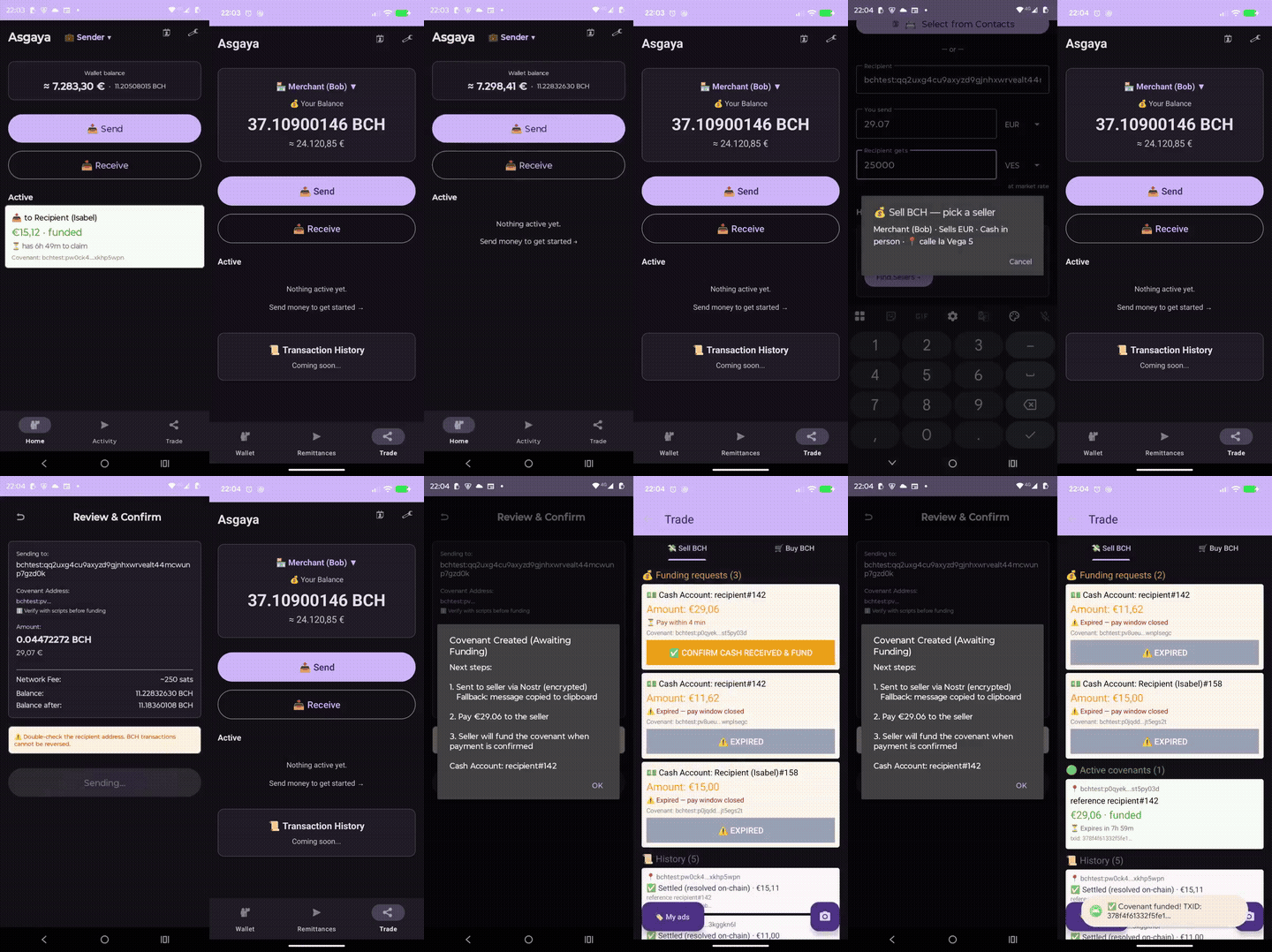
María opens the app, selects “Send money,” enters €100. The app queries the bulletin board—an on-chain list of BCH sellers who can automatically fund covenants using payment notifications from their banking apps.
María sees Isabel listed: “Accepts Bizum (Spanish mobile payment), 0.5% fee, active now.” María selects Isabel and creates a covenant with a 7% volatility buffer and 8-hour claim window. She gets payment instructions via Nostr: “Send €100.50 via Bizum to Isabel, reference: ELENA#142.”
María sends the Bizum payment. Isabel’s phone is monitoring bank notifications 24/7. The notification arrives: “Received €100.50 from María.” Isabel’s bot parses the notification, extracts the amount, sender, and reference, then auto-funds the covenant with €107 worth of BCH to cover the buffer.
Elena gets a Nostr notification: “You have €100 worth of BCH from María. Claim within 8 hours.”
Elena opens the app, sees two options: claim BCH directly to her wallet (free), or cash out at a local merchant (0.5% fee). She taps “Find merchant.” The app shows Carlos’s grocery store nearby. Elena walks to the store, tells Carlos: “I want to cash out a remittance.” Carlos opens his app, types “Elena#142” (her Cash Account), sees the pending covenant, hands Elena cash. Both tap “Confirm” to co-sign the covenant. BCH moves directly from the covenant to Carlos.
Carlos now holds €100 worth of BCH. He doesn’t want volatility risk, so he mints H€ tokens (Euro-pegged) using an AnyHedge-inspired contract. A bull pool provides the long position, Carlos takes the short side, locking in stable value. He holds the H€ tokens, cashes out when he needs VES for restocking.
The key insight: Carlos isn’t just accepting BCH—he’s buying it from remittance recipients with built-in customer acquisition. Elena came to cash out and stayed to buy groceries.
Why This Works for Merchant Adoption
The merchant capable of cashing out a remittance is a business anyone can pay with BCH. Why would they do it? Three reasons.
Reason one: Fee revenue. They earn 0.5% on every cash-out. €100 remittance = €0.50 fee. If they cash out ten remittances per week, that’s €5 in extra revenue. Small amount, but it compounds.
Reason two: Customer acquisition. Elena came to cash out and bought groceries. That’s the key—recipients don’t just cash out, they become customers. The right business sells products and services alongside the cash-out service.
Reason three: Stable holding. Merchants don’t want volatile BCH, they want stable value. H€ and HAu tokens solve this—Euro-pegged or gold-pegged value using AnyHedge-inspired contracts. In hyperinflation markets, every remittance they cash out is an opportunity to dump rapidly depreciating fiat for stable crypto.
Compare this to Western Union: 5-10% fees, no merchant involvement, bank-dependent, recipient waits days for pickup. Asgaya: 1% total fees (0.5% seller + 0.5% merchant), P2P, no KYC, settlement in 30 minutes, (and most of that time is Elena walking to Calos’s) merchant keeps value stable.
The adoption flywheel: Remittances create merchant demand. Recipients become customers. Merchants accumulate stable value. Sellers automate passive income via notification bots. Everyone saves 90% on fees. Self-funding, no intermediaries.
What We’ve Built So Far
Five months ago I posted about how close we were to having a remittance app. The feedback made me realize we weren’t that close—I’ve been building since then.
Completed:
- Full conceptual framework at docs.asgaya.org
- The Mechanism — covenant architecture, payment-first model, stability layer
- Notification bot research (RS072) — 48-hour validation test complete
- Production-ready: boot receiver, battery exemption, foreground service
- My phone monitors Bizum notifications 24/7 from five Spanish banks, parsing amount/sender/reference automatically
Current status: Phase -1 (documentation complete, notification bot validated, almost ready for Phase 0 trials with real money)
I haven’t shared this project publicly until now because the idea was immature. It’s mostly still research, but I’m getting close to testing with real money and potential users.
I’m especially interested in feedback on:
- The Mechanism
- Unknowns — 14 investigation briefs with hypotheses that need real-world testing
- Edge cases I haven’t considered
- Phase 0 trial candidates
The examples use EUR and Venezuelan bolívares (VES), but there’s no reason this shouldn’t work in any high-remittance, high-inflation corridor.
Any insight is welcome.
 This is funny because when I started to put everything together I said something similar, “we’re making a new Lightning network”. The thing is the more efficient option, I’d argue, is Bitcoin Cash. The hoops aren’t inefficiency. They’re the price of having no custodian and no intermediary. Remove them and you need to be an expert to tell it apart from the system I’m trying to replace.